Number of cultural activities on campus (e.g. Cultural Festival) including virtual activities (if any)
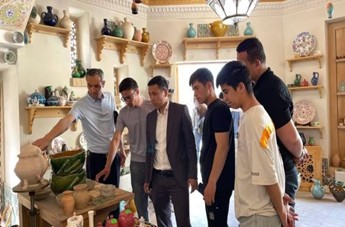
Cultural activities at Navoi State University of Mining and Technologies

Description
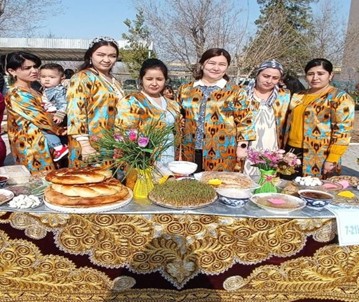
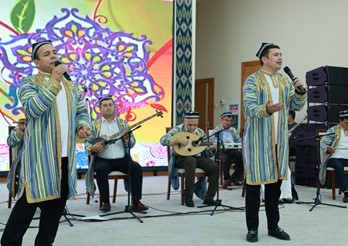
Each year, Navoi State University of Mining and Technologies hosts approximately 100 cultural events that celebrate the nation’s rich heritage and traditions. These include national holidays such as Navruz, Independence Day, Ramadan, Constitution Day, and others, as well as themed cultural days like “Atlas” and “Adras” Day (national costume for women in Uzbekistan), “Doppi” Day (national head cap for Uzbeks).
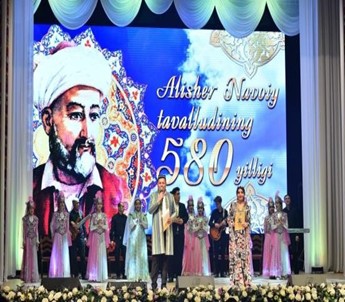
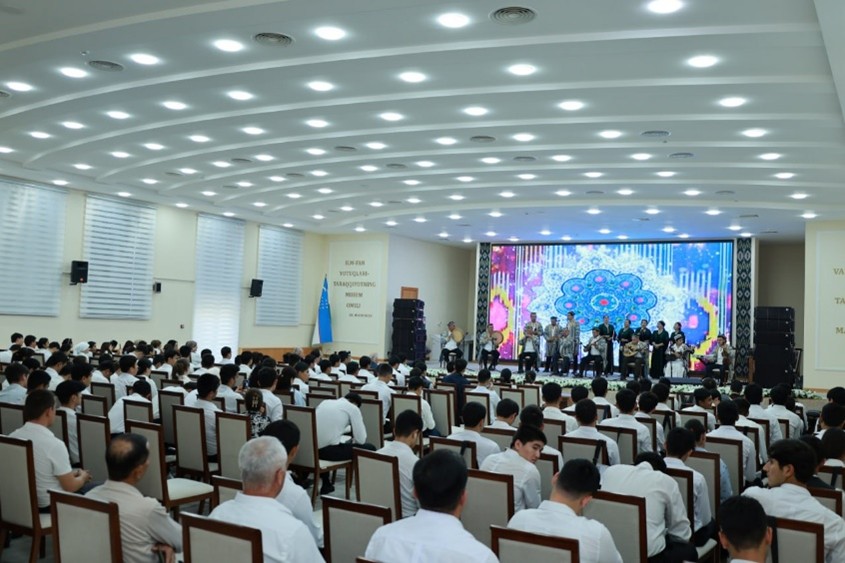
The university also commemorates the anniversaries of prominent historical and literary figures such as Alisher Navoi (great Uzbek poet, founder of Uzbek literature), Amir Temur (Tamerlane, founder of the Timurid dynasty) and Zahiriddin Muhammad Bobur (great Uzbek poet and statesman, founder of Baburid dynasty in India). These events often feature poetry readings, traditional performances, and various cultural activities that foster unity among students and strengthen their connection to Uzbekistan’s shared cultural legacy. In 2023, the university organized 37 cultural events aimed at promoting cultural awareness and encouraging student engagement. By 2025, this number had increased to nearly 100 events.
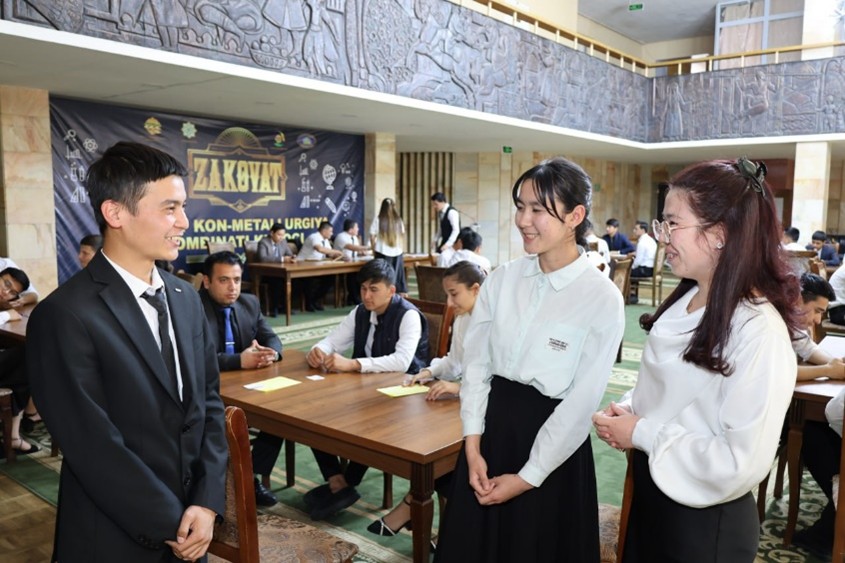
In April 2025, as part of the “Student Spring” festival initiated by the Ministry of Higher Education, Science and Innovations of the Republic of Uzbekistan, an intellectual game called “Zakovat” (Intelligence) was organized among students of the university. The competition, held in two stages, featured questions primarily focused on topics such as science, history, technology, culture, and contemporary worldviews. Each team demonstrated strong preparation and logical thinking skills. Such events held at the university play an important role in fostering cultural awareness and developing critical thinking among students.
https://t.me/ndktu_rasmiy/18485
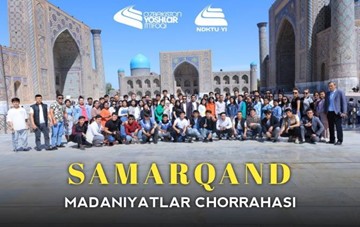
In addition, as part of cultural events aimed at organizing employees’ leisure time in a meaningful and effective manner, trips to historical destinations in Uzbekistan, such as Samarkand, Bukhara, Khiva and the Fergana Valley are being organized. These trips are provided free of charge by the university’s Trade union committee in coordination with the University Sustainability Office. University buses are used for transportation during these trips, enabling the efficient and multi-purpose use of existing infrastructure.
Video links
https://t.me/ndktu_yi/17799
https://t.me/ndktu_yi/17800
https://t.me/ndktu_yi/17801
https://t.me/ndktu_yi/17794

Navoi State University of Mining and Technologies & Government Collaboration: A Pillar of National and Global SDG Partnerships (SDG 17)

Navoi State University of Mining and Technologies (NSUMT) is a dynamic partner in Uzbekistan’s pursuit of the United Nations Sustainable Development Goals (SDGs). Through deep institutional commitment and sustained collaboration with governmental bodies, NSUMT not only aligns its internal practices with sustainable development objectives, but also helps shape national policy frameworks. Central to this endeavor is SDG 17: Partnerships for the Goals, which underscores that transformative progress depends on cooperation across institutions, sectors, and borders.
By collaborating closely with the Cabinet of Ministers, the Ministry of Higher Education, Science, and Innovation, and other key ministries, NSUMT ensures that its academic, administrative, infrastructural, and research activities advance the national SDG agenda. The university therefore serves as both a model and a contributor to Uzbekistan’s sustainable development strategy.

Strategic Coordination with Government and UNESCO Engagement

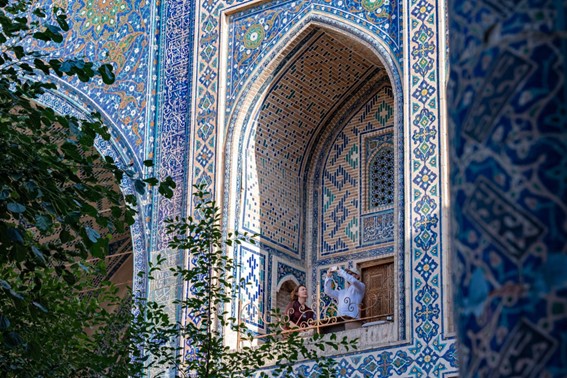
One of the most visible manifestations of this partnership is NSUMT’s active involvement in supporting Uzbekistan’s role in the upcoming 43rd session of the UNESCO General Conference, scheduled for October 30 – November 13, 2025, in Samarkand. This session will be held at the Silk Road Samarkand Congress Hall, within the broader Silk Road Samarkand complex, and is set to host delegations from all UNESCO member states. This is a historic milestone: it is the first time the UNESCO General Conference will be held in Uzbekistan, and only the second time since 1985 that it will convene outside UNESCO’s Paris headquarters. NSUMT’s collaboration contributes in multiple ways:
• Providing expert inputs to government and UNESCO on policy, education, cultural heritage, renewable energy, and scientific innovation.
• Supporting the Organizing Committee under the Prime Minister, which leads preparations for the conference.
• Engaging in preparatory dialogues with UNESCO leadership. For example, President Shavkat Mirziyoyev met with UNESCO Director-General Audrey Azoulay in March 2025 in Paris to advance planning and deepen institutional ties. • Promoting cultural diplomacy via media campaigns, exhibitions, publications, and restoration of heritage sites in Samarkand, Bukhara, and other cities.
• Ensuring that logistical, technical, and registration infrastructure is in place, integrating campus-level capacities to support the national effort.
These contributions amplify Uzbekistan’s global visibility, strengthen institutional credibility, and underscore the symbiosis of national development and global engagement — a core tenet of SDG 17.
UNESCO General Conference 2025 in Samarkand, Uzbekistan

Heritage Preservation, Cultural Revival, and Sustainable Identity

Aligned with UNESCO’s emphasis on cultural and natural heritage, NSUMT plays a role in supporting restoration, conservation, and public engagement initiatives that underscore national identity and global heritage values:
• The government’s planned restoration of the Bibi-Khanum Mosque, Amir Timur’s Gardens, and the development of the State Museum of the Great Silk Road are key heritage projects tied to the UNESCO conference.
• NSUMT, in coordination with the Fund for the Development of Culture and Art (the working body responsible for the UNESCO session) and the National Commission on UNESCO Affairs supports research-based restoration, archiving, and educational outreach.
• Through joint exhibitions, cultural forums, and media products (e.g., commemorative coins, stamps, publications, audiovisual works), NSUMT helps bridge academic knowledge and public engagement in heritage.
These actions link institutional efforts with broader cultural diplomacy objectives, demonstrating how local actors contribute to global heritage stewardship — again, a manifestation of partnerships at multiple scales (SDG 17).

UNESCO General Conference 2025 in Samarkand, Uzbekistan

Institutional Governance, Administrative Transparency and Student Services

To embed sustainable governance practices, NSUMT has instituted operational reforms that mirror national best practices:
• A Registration Office has been established centrally on campus to streamline student and staff services. This office ensures transparency, accountability, and effective coordination — principles central to SDG 16 (Peace, Justice, and Strong Institutions).
• The Registration Office acts as a conduit between university stakeholders and government-mandated institutional standards, making sure that operational decisions are consistent with national SDG policies.
• Through this mechanism, NSUMT reinforces institutional resilience and governance effectiveness, which is essential for sustaining long-term partnerships.

Pioneering Renewable Energy Transition on Campus

NSUMT has positioned itself as a national leader in renewable energy integration, notably:
• In compliance with the Presidential Decree of May 3, 2019, the university began deploying solar photovoltaic (PV) systems across its campus. Over time, the goal has been to transition to fully solar-powered campus operations, thus reducing greenhouse gas emissions and energy dependency.
• This work directly supports SDG 7 (Affordable and Clean Energy) and SDG 13 (Climate Action), showcasing how universities can operationalize national environmental mandates in concrete ways.
• Implementation of such renewable systems requires collaboration with government ministries, technology firms, and financial institutions, embodying public–private–academic partnerships — the essence of SDG 17.

Education, Industry Linkages, and Experiential Learning

NSUMT integrates sustainability into its educational mission through deeper engagement with industry and heritage:
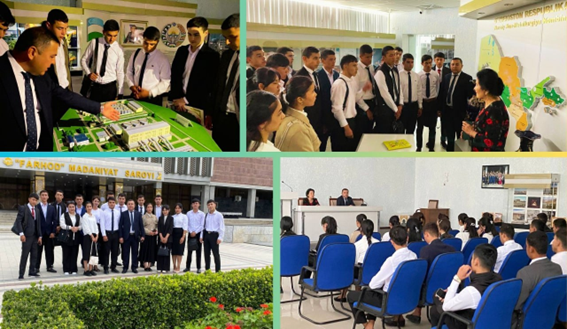
• First-year students at the Chemistry and Metallurgy Faculty recently visited the “History of NMMC” Museum in Farkhod Cultural Palace. The museum chronicles the development of the Navoi Mining and Metallurgical Combine (NMMC), giving students direct insight into local industrial heritage and scientific innovation.
• During museum tours, students learn about the accomplishments of leading Uzbek scientists and technologists, nurturing inspiration while grounding education in national industrial context.
• Such programs deepen industry–university linkages, facilitate knowledge transfer, and cultivate a generation of graduates grounded in both local relevance and global sustainability thinking.
• This model echoes the call under SDG 17 for academic–industry partnerships that mobilize resources, share knowledge, and build capacity.

education, industry linkages, and experiential learning at NSUMT

Expanding Collaboration Networks & Knowledge Exchange

Beyond domestic partnerships, NSUMT is enabling transnational collaboration:
• Through involvement in the UNESCO conference, NSUMT is connecting with universities, research centers, cultural institutions, and civil society organizations from across the globe.
• These interactions will foster exchange in education, sustainable mining practices, renewable technologies, heritage conservation, and climate adaptation.
• NSUMT’s role as both a contributor and beneficiary of these networks strengthens Uzbekistan’s integration into global sustainable development efforts.
• Furthermore, such engagement helps attract international funding, joint projects, academic mobility, and research collaborations in line with SDG 17’s aims.

Embodying SDG 17 Through Practice and Promise

NSUMT’s cooperation with the Government of Uzbekistan and international institutions illustrates how purposeful partnerships can transform policy into practice. By aligning campus operations, education, research, heritage restoration, and governmental engagement with national and global SDG priorities, NSUMT demonstrates a holistic model of sustainable institutional leadership.
As the 43rd UNESCO General Conference approaches, NSUMT stands ready to contribute meaningfully — not only through logistical and technical support, but by bringing forward ideas, innovations, and collaborative momentum. In doing so, the university embodies the spirit of SDG 17: Partnerships for the Goals — proving that real progress is achieved when higher education, government, industry, and society work in concert.