Water Conservation Program at Navoi State University of Mining and Technologies
Our commitment to sustainability extends to conserving, recycling and reusing recycled water in different spheres within our campus. Navoi State University of Mining and Technologies shows it through implementing effective water conserving strategies, initiatives, programs and policy. Our Main aim is to reduce our environmental impact while aiming to build health community.
Our university is committed to sustainable water management practices across the campus. We have implemented a range of innovative solutions to conserve water and ensure its efficient use.
1. Rainwater Harvesting System: many of our buildings are equipped with advanced rainwater harvesting systems. Rainwater is collected from rooftops and other impermeable surfaces, such as parking lots, and channeled into underground reservoir (closed water tank). This harvested water is then treated and utilized for non-potable purposes, including flushing toilets, irrigating gardens, and maintaining campus landscapes.
2. Separation of Wastewater: our campus features a dual sewerage system that separates wastewater from clean rainwater. This system ensures that rainwater is directed to natural water bodies, such as ponds and small lakes within the campus, helping to recharge the groundwater and maintain the ecological balance.
3. Sustainable Landscaping: we have designed our green spaces to be water-efficient. Native plants, which are more drought-resistant, are used extensively across the campus. These plants require minimal watering, thus reducing our overall water consumption. Additionally, drip irrigation systems have been installed in key areas to minimize water wastage.
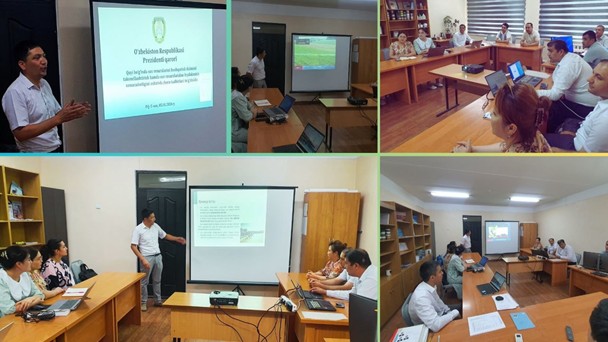
4. Water Conservation Education: beyond infrastructure, we emphasize the importance of water conservation among our students and staff. Regular workshops and seminars are conducted to raise awareness about sustainable water use, and students are encouraged to participate in water conservation initiatives.
5. Monitoring and Evaluation: water management systems are continuously monitored to ensure they operate with maximum efficiency and reliability. Through ongoing assessments and performance evaluations, we proactively identify areas that require improvement and accurately measure the effectiveness of our water conservation initiatives. This data-driven approach enables us to optimize water consumption, reduce waste, and make a positive contribution to environmental sustainability. In line with these efforts, a significant project titled "Autonomous Control System for Individual Hot Water Supply" has been developed by a team of scientists and innovative students from the Electro Energetics Department at Navoi State University of Mining and Technologies. This advanced laboratory device represents a meaningful step forward in the field of sustainable energy and water management. Originally designed as a prototype, the system has now been fully localized and refined for practical use. It is currently available for order by higher education institutions and vocational training centers that offer programs in energetics, renewable energy, or related technical disciplines. Its integration into educational settings supports hands-on learning and promotes innovation in sustainable engineering practices. The device not only manages the delivery of hot water autonomously but also continuously monitors water usage across the system. It is capable of detecting inefficiencies and identifying problem areas within the water supply infrastructure. By analyzing this data, the system provides actionable insights that help institutions enhance the efficiency of their water usage and implement more sustainable practices. Overall, the deployment of this autonomous control system serves as a practical tool for improving resource management and serves as a valuable educational resource for training the next generation of engineers and sustainability professionals.
6. Innovative Device for Converting Groundwater into Clean Drinking Water Using Solar Energy: specialists from the Navoi Mining and Metallurgy Combine, together with scientists from Navoi State University of Mining and Technologies, have created an innovative device that converts groundwater into clean drinking water using solar energy. Today, the new technology is installed on the university campus and is serving everyone, including city residents. This new technology extracts groundwater from a 60-meter-deep well and produces 70 cubic decimeters of clean water per hour. Most importantly, the clean water is offered at an affordable price – 5 liters for 1,000 (about 8 US cents) soums and 10 liters for 2,000 (about 16-17 US cents) soums. You can purchase clean water at any time of the day, even at night.
Water Conservation systems at Navoi State University Of Mining And Technologies
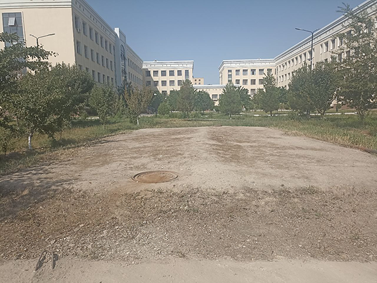
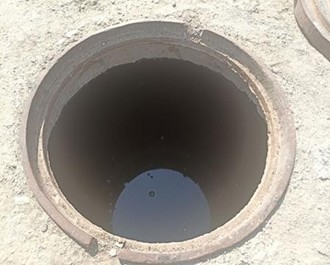
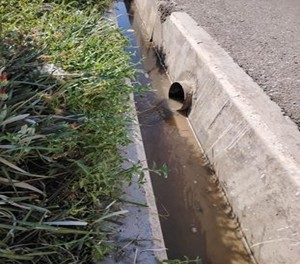
Rainwater is collected from the rooftops and open surfaces such as parking areas across the university's campuses. This harvested rainwater is directed into centralized storage systems, including reservoirs at the main campus with a combined capacity of almost 200,000 liters. The collected water is used for various purposes such as plant irrigation, promoting sustainable campus greenery. In addition to the centralized storage, the university has recharging pits with a total capacity of 30,000 liters at the main campus to support groundwater replenishment. The existing infrastructure allows for basic water collection and redirection, enabling efficient use of limited rainfall at the campuses of the university. Thanks to these efforts Navoi State University of Mining and Technologies has been achieving ~70% water conservation efficiency through infrastructure. Water recycling includes continuous groundwater purification and rainwater reuse throughout the year, not solely the static storage capacity.
Water Conservation system
| University and Location | Average Rainfall (mm/hr) | Water Flow Rate (liters/hr) | Number of Reservoirs | Capacity of Reservoirs (liters) | Number of Lakes | Capacity of Lakes (liters) | Number of Recharging Pits | Capacity of Recharging Pits (liters) |
| All Campuses of Navoi State University of Mining And Technologies | 5 | 1500 | 2 | 200,000 | 1 | 80,000 | 3 | 30,000 |
Given the climate and weather conditions of Navoi,
Uzbekistan, the average rainfall is relatively low,
especially during the summer season. These values are
adjusted based on the typical rainfall and water
conservation capabilities relevant to the Semiarid climate
of Navoi city, which experiences low annual precipitation
with most rain falling in the cooler months.
Moreover, the university organizes around ten events
involving professors, lecturers, and students, aimed at
promoting responsible water consumption, preventing water
misuse, and encouraging proper use of water resources. Total
number of participants involved in these events exceeds 1200
participants.
In line with the essence and objectives of the Resolution of
the President of the Republic of Uzbekistan dated January 5,
2024, titled "On Improving the Water Resources Management
System at the Lower Levels and Enhancing the Efficiency of
Water Resource Utilization", awareness-raising meetings are
being held in various organizations with the participation
of scholars from the university's Agricultural Engineering
and Communication Technologies Faculty.
These events focus on raising public awareness about water
conservation culture and emphasize the implementation of
innovative technologies in the field of irrigation. As part
of these initiatives, university students are actively
engaged in volunteering activities aimed at promoting
water-saving practices and enhancing the culture of water
use among the population.
To check the climate of Navoi, click on the links below:
Climate-Data
World Weather Online