Program to limit or decrease the parking area on campus
From 2020 to 2025, our campus has taken active steps to
reduce the number of private vehicles and promote
sustainable transportation alternatives. These initiatives
are part of our broader commitment to environmental
sustainability and improving traffic flow on campus. The key
measures include:
1. Limiting Parking Zones for Students and staff
(2020-2025): Our Sustainability report shows the information
on how our parking area was reduced over the years. In 2020
It was almost 13000 m2, while in 2022 it was reduced to 5909
m2, and in the beginning of 2025 it became around 3900 m2
(the area decreased by approximately 34% from 2022 to early
2025).
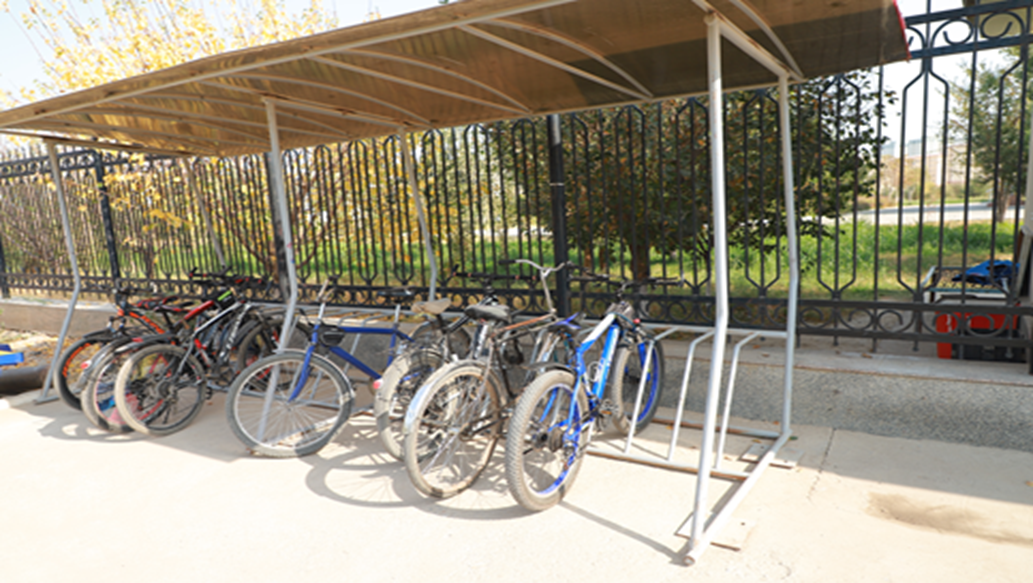
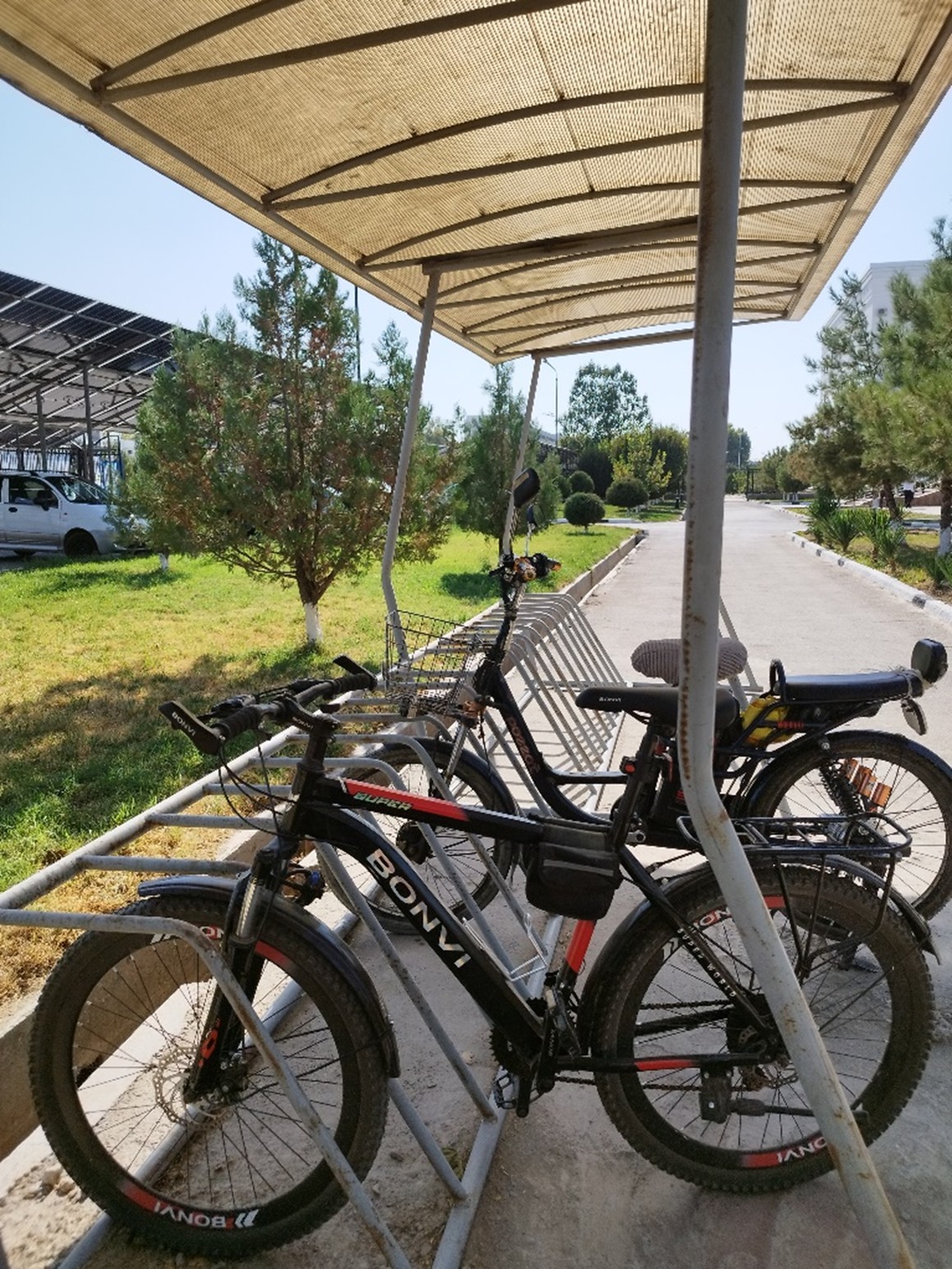
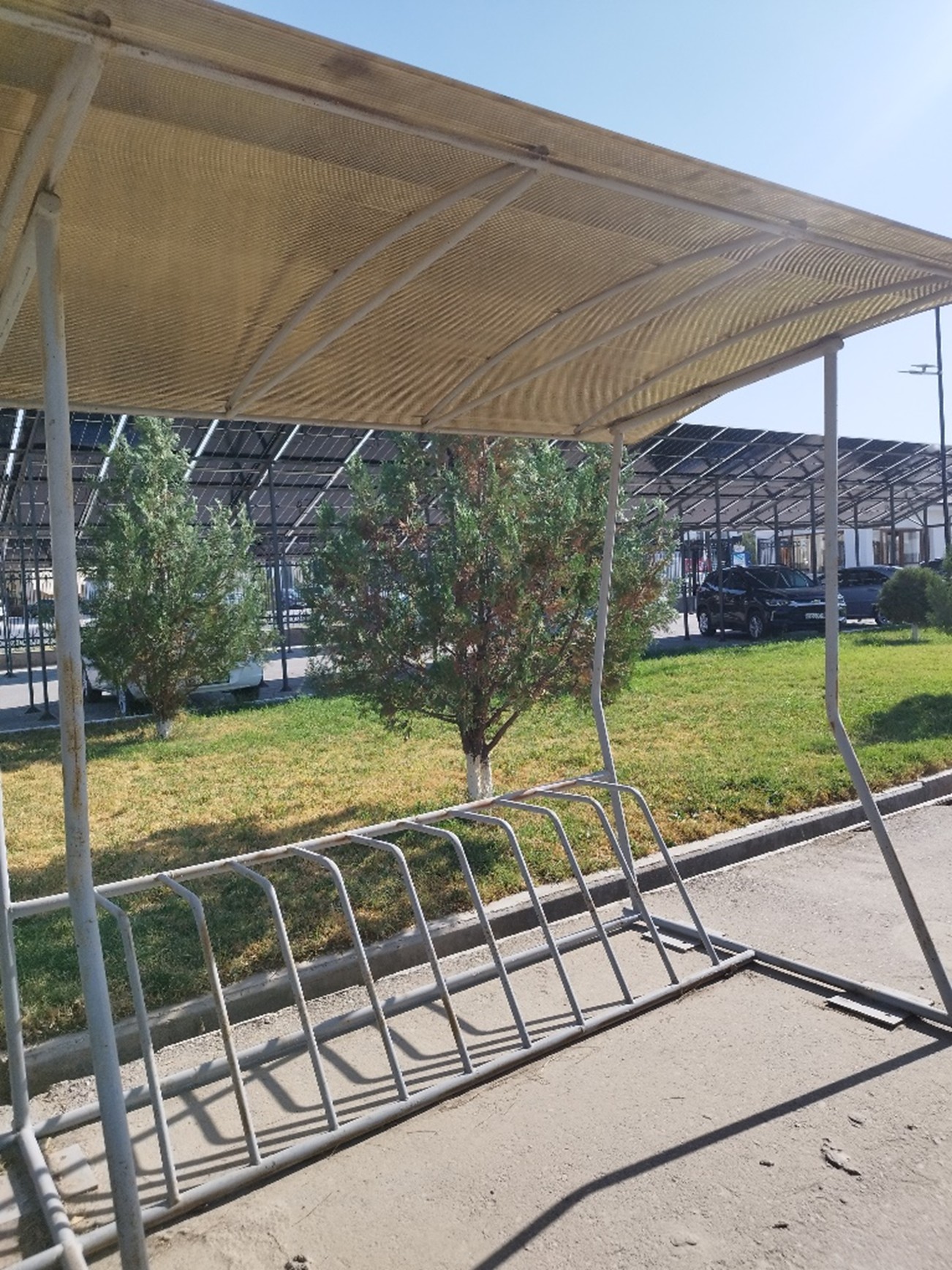
2. Free Bicycle Rentals
Exactly 35 free bicycles are available for use by university
staff provided by university administration.
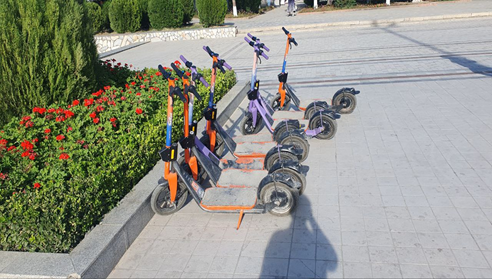
3. Electric Scooter Availability (15 are available)
4. Campus Shuttle Services
5. Sustainable Infrastructure
Navoi State University of Mining and Technologies has taken
significant steps toward sustainable transportation as part
of its commitment to environmental responsibility and
alignment with the UN Sustainable Development Goals. Recent
efforts have focused on reducing the environmental impact of
personal vehicle use, improving mobility, and creating a
more efficient and eco-friendly campus.
Key actions include the implementation of a campus-wide
shuttle system, the introduction of free bicycle rentals and
electric scooters, and the development of infrastructure to
support electric vehicles. A major milestone has been the
continuous reduction of campus parking zones, which has
directly contributed to lowering traffic congestion,
improving air quality, and encouraging the use of
alternative transport.
By promoting shared transportation, limiting vehicle access,
and supporting low-emission mobility options, the university
is not only reducing its carbon footprint but also fostering
a safer, quieter, and more sustainable campus environment.
These initiatives contribute directly to key SDGs,
particularly those related to sustainable cities and climate
action.