Impact of transportation programs in supporting the Sustainable Development Goals (SDGs)

Description:
Navoi State University of Mining and Technologies has made
significant efforts to transform its campus transportation
into a more sustainable, inclusive and low-impact system.
Through strategic planning and implementation of various
green transport initiatives, the university demonstrates a
strong commitment to contributing to the United Nations
Sustainable Development Goals (SDGs). University’s approach
focuses on reducing dependency on private vehicles,
promoting zero-emission alternatives, integrating ICT tools,
and increasing accessibility for all community members.
Key Sustainable Transportation Programs:
1. Overview and Vehicle Population Metrics
The university currently manages a total of 51 vehicles on
campus, including shuttle cars, buses, and private vehicles
entering the premises. The breakdown is as follows:
• University-managed cars: 6
• Private cars entering daily: 35
• Shuttle buses: 5
• Motorcycles: 0 (not permitted on campus)
Given a total campus population of 11465, the
vehicle-to-population ratio is 0.004, reflecting a low
dependency on private motorized vehicles.
2. Shuttle Services: Sustainable and Efficient Campus
Transport
NSUMT operates a fleet of 6 shuttle cars and 5 shuttle buses
to facilitate reliable and eco-friendly mobility on campus
and throughout Navoi city. These shuttles connect key campus
locations, including academic buildings, dormitories,
administrative offices, and recreational areas. Key features
include:
• Seating capacity: 50 passengers per bus
• Frequency: 4 circulations daily on fixed routes
• Amenities: Air conditioning, free Wi-Fi, USB charging
ports
• Travel time: 10-20 minutes from city locations to campus
• Professional drivers ensuring safety and comfort
These services reduce reliance on private vehicles, minimize
traffic congestion, and lower campus carbon emissions.
3. Parking and Traffic Management
To reduce congestion and promote sustainable transportation,
NSUMT has actively reduced campus parking areas from 13,000
m² in 2020 to approximately 3,978 m² in 2025, currently
accounting for just 1.6% of total campus area (253,000 m²).
The university restricts vehicle entry to about 35 private
cars daily, encouraging alternative transport modes.
Motorcycles are banned, improving safety and reducing noise
pollution.
4. Zero Emission Vehicles (ZEV) and Active Mobility
Initiatives
NSUMT promotes zero-emission vehicles to improve air quality
and promote sustainable mobility. Key initiatives include:
• Bicycle fleet: 35 free bicycles available for staff and
students (recently expanded with 15 new bikes).
• Electric scooters: 15 scooters available for free.
• Car-Free Day: Saturdays declared as car-free to encourage
walking and cycling.
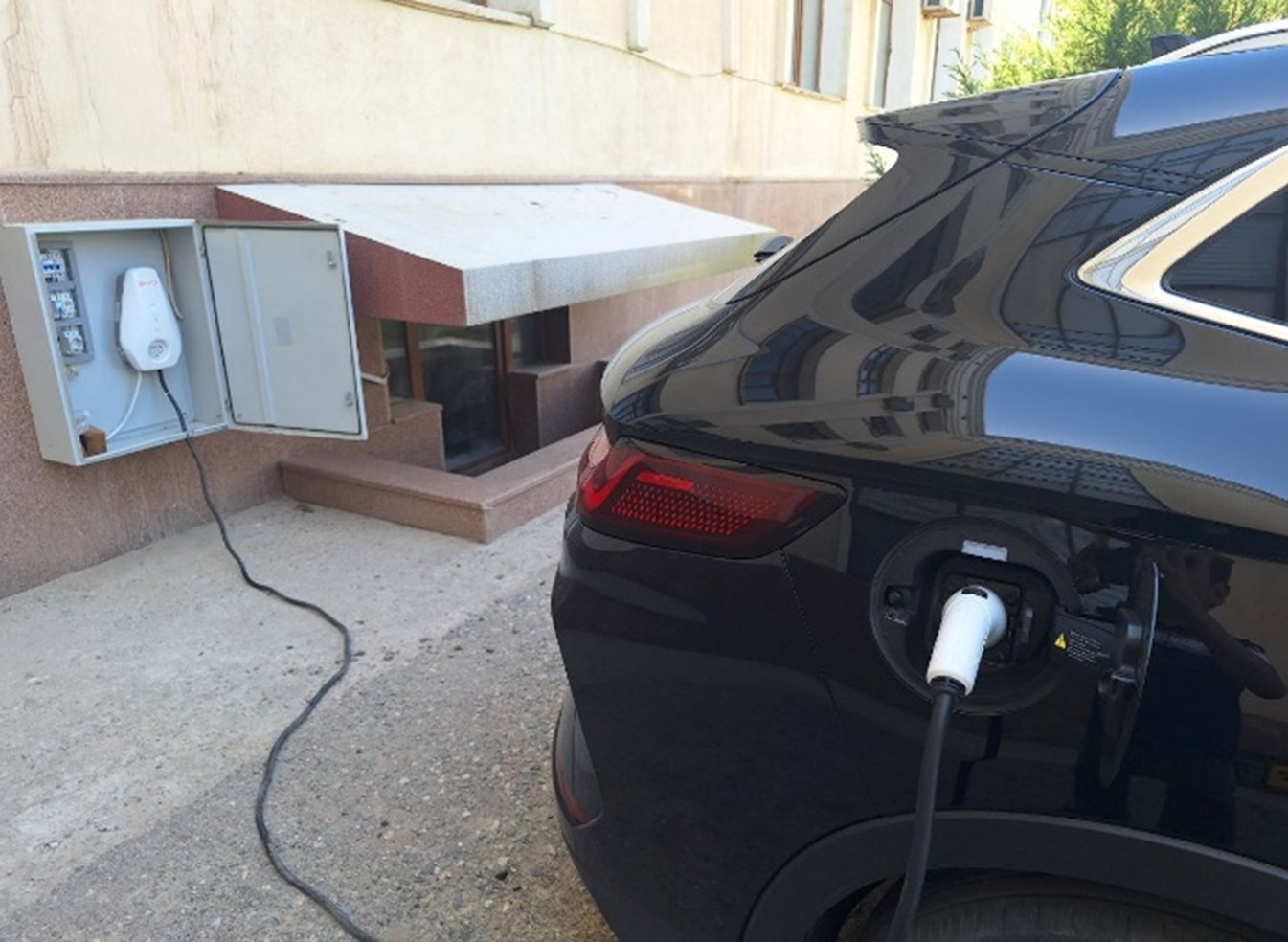
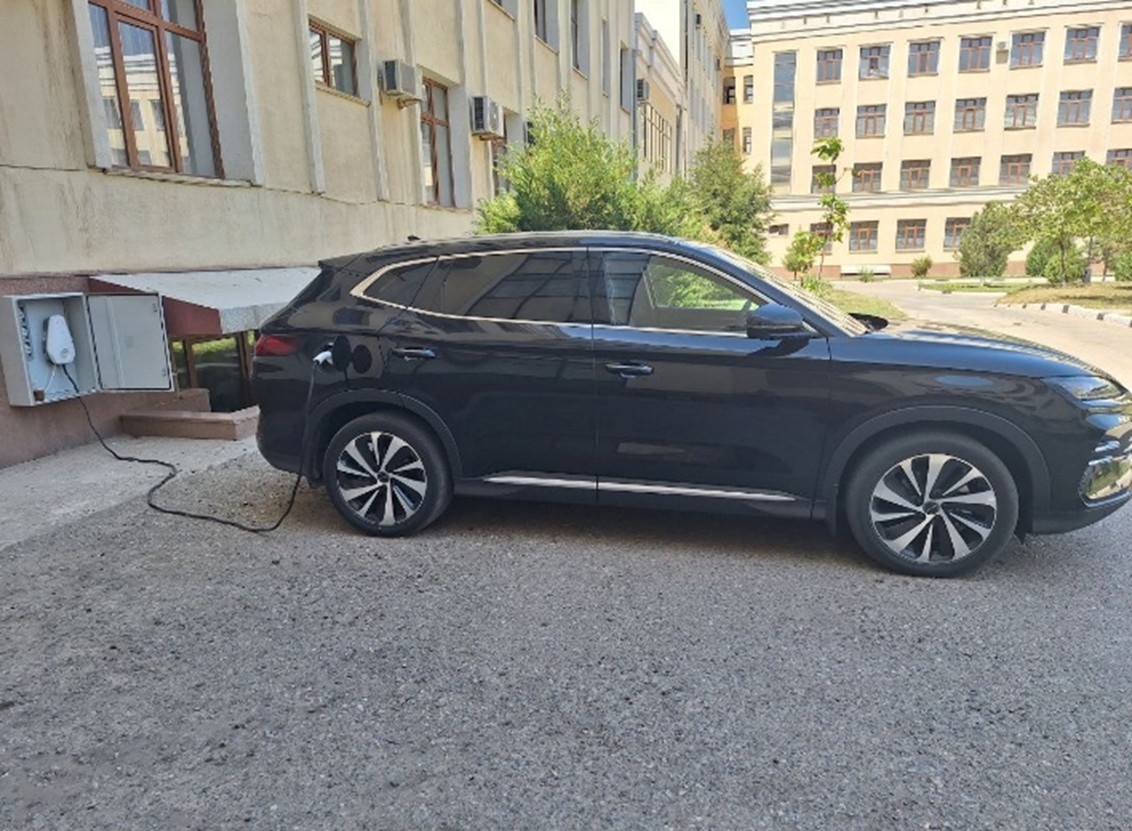
• Charging infrastructure: A dedicated electric vehicle (EV)
charging station on campus to encourage EV adoption (about
15 electro mobiles).
• Safe pedestrian and cyclist infrastructure: Red, grey, and
yellow lanes cater to bicycles, pedestrians, and visually
impaired individuals respectively, along with solar-powered
street lighting (200 solar lamps).
• Given a total campus population of 11465, the ratio is
0.0056
These efforts contribute to reduced greenhouse gas
emissions, healthier lifestyles, and a safer campus
environment.
5. ICT-Enabled Transport Management
NSUMT utilizes advanced Information and Communication
Technology (ICT) for transportation planning and management:
• Transport planning software used for route optimization
(Jan-Feb 2024)
• GPS tracking of shuttles for real-time monitoring and
route adjustments (Mar-Apr 2024)
• Continuous data analytics on shuttle usage and efficiency
• Annual evaluations using user feedback and performance
metrics
This data-driven approach ensures optimized routes,
punctuality, and user satisfaction.
6. Research and Innovation in Sustainable Transport
NSUMT supports transport-related research, sending 27 young
researchers to leading global universities to study
improvements in mechanical engineering and transport
logistics. Notably, a PhD dissertation by Akbarjon
Normurodov proposed biofuel enhancements reducing diesel
exhaust emissions by 3-6%, demonstrating the university’s
commitment to cutting-edge sustainable transport solutions.
7. Sustainable Transportation Initiatives (2020-2025)
• Progressive reduction of parking areas to discourage
private vehicle use
• Promotion of shared transport via shuttle services and
carpooling
• Expansion of zero-emission mobility options: bicycles,
scooters, and EVs
• Infrastructure upgrades to support safe pedestrian and
cycling routes
• Use of ICT for continuous monitoring and service
improvement
• Research collaborations to innovate sustainable
transportation technologies
These efforts directly support SDGs 3, 4, 7, 9, 11, 12, 13,
and 17, and contribute indirectly to others, including:
| SDG 3 – Good Health and Well-being | Car-free zones, active transport (bicycles, walking), reduced air pollution |
| SDG 4 – Quality Education | Accessible campus via shuttles and public transport links |
| SDG 7 – Affordable and Clean Energy | EV charging station, solar-powered lighting |
| SDG 9 – Industry, Innovation, and Infrastructure | ICT for route planning and monitoring |
| SDG 11 – Sustainable Cities and Communities | Inclusive, safe, and accessible transport infrastructure |
| SDG 12 – Responsible Consumption and Production | Reduced parking, promotion of shared mobility |
| SDG 13 – Climate Action | Emission reduction from limited private car use, ZEV promotion |
| SDG 17 – Partnerships for the Goals | Cross-department collaboration, public engagement initiatives |
Navoi State University of Mining and Technologies has taken comprehensive, measurable steps toward sustainable transportation. With initiatives rooted in ICT, renewable energy, mobility access, and community engagement, the university aligns very well with global sustainability goals. The integration of low-emission transport modes, pedestrian-friendly planning, and smart transport management shows a strong institutional commitment to sustainability and public health.