Elements of Green Building Implementation as Reflected in
All Construction and Renovation Policies
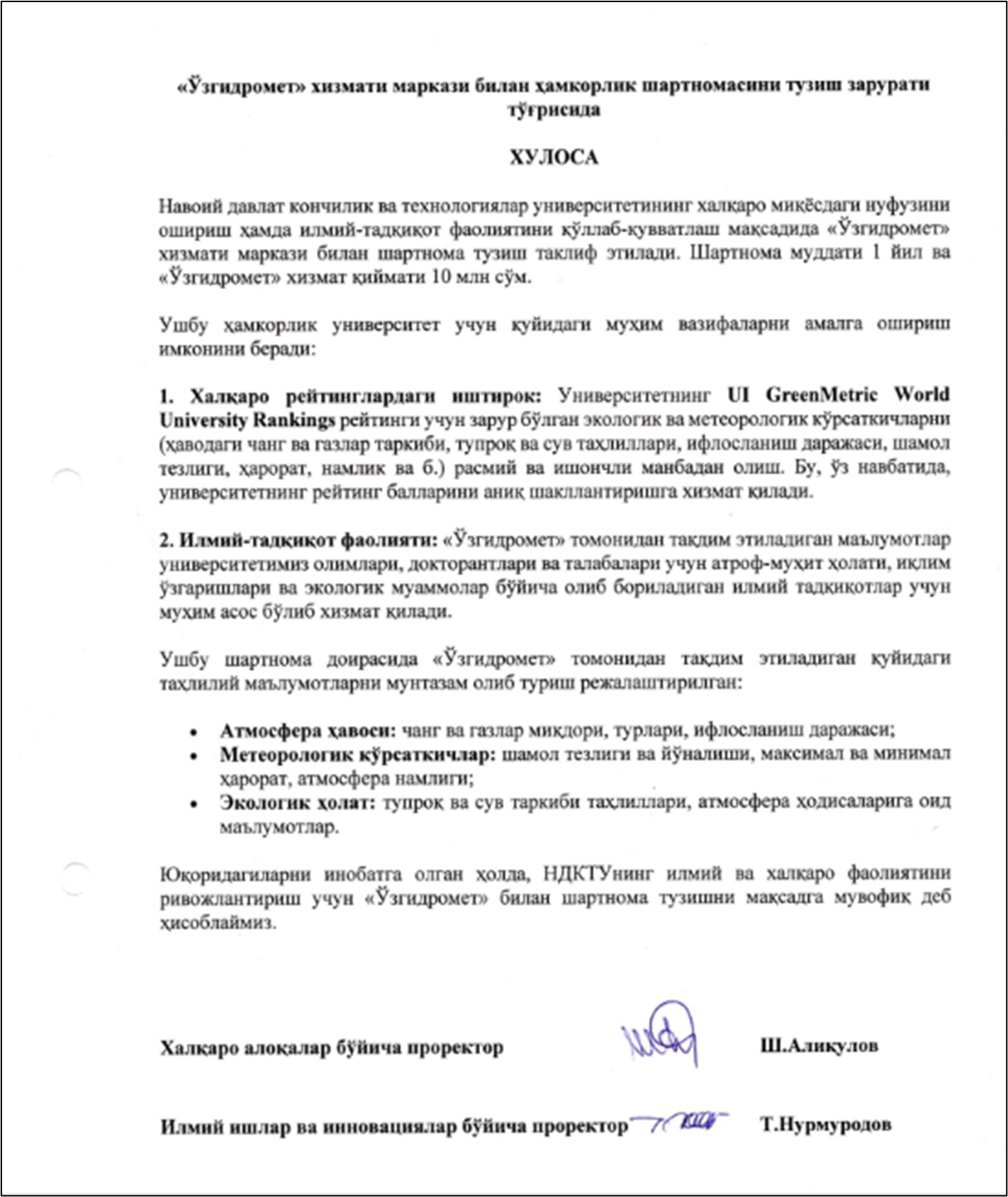
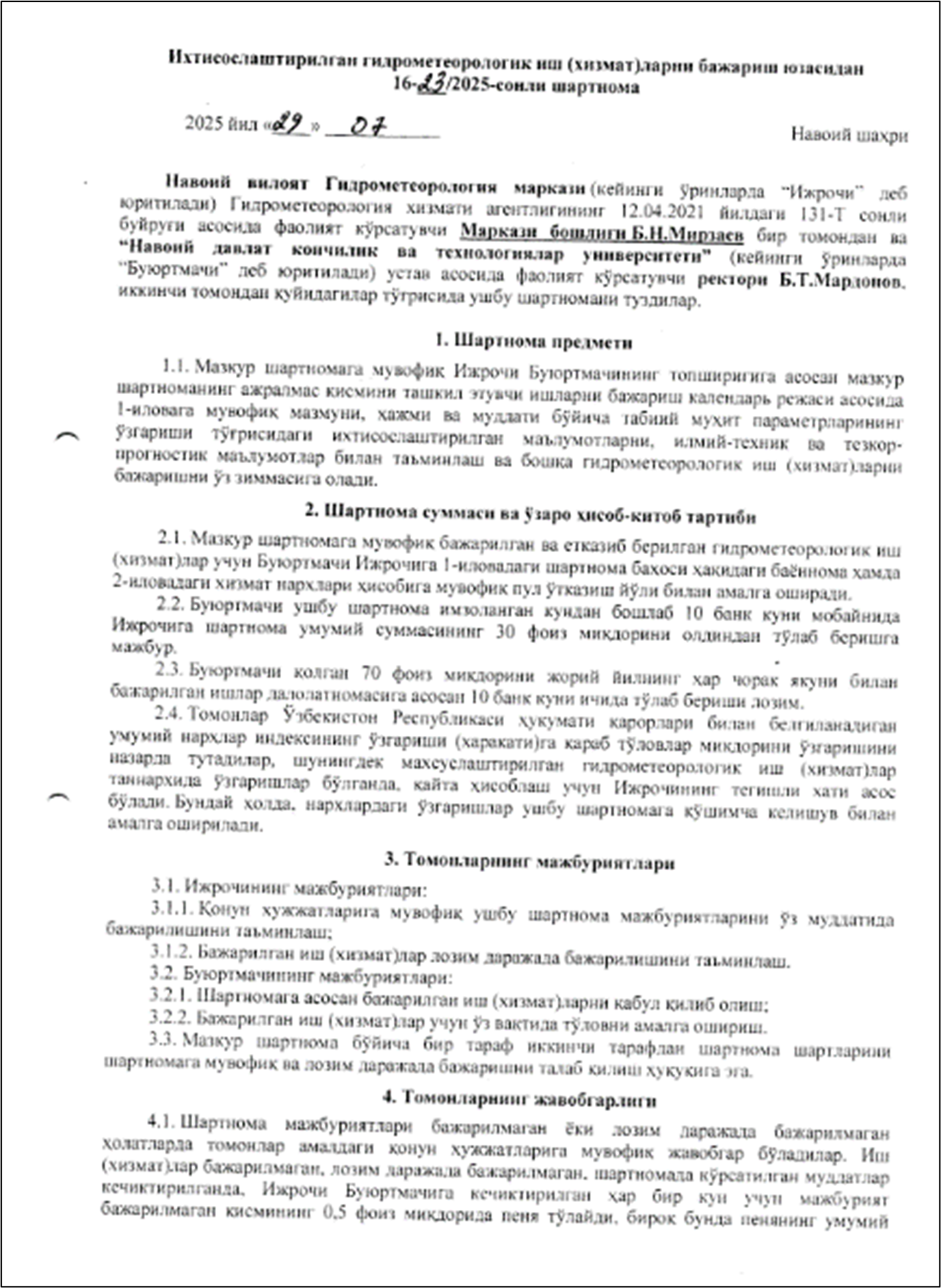
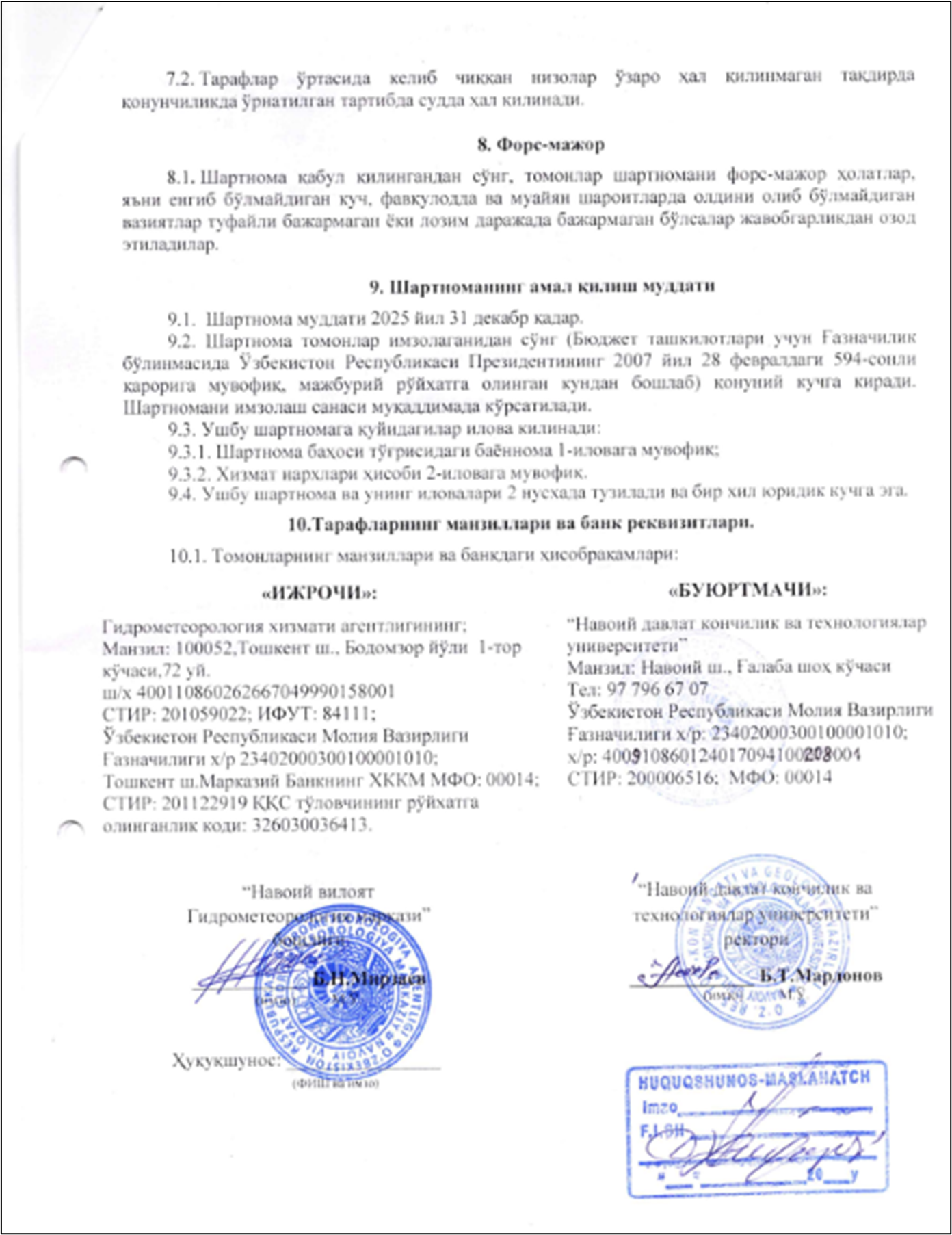
Agreement with local hydrometeorological center to ensure
monitoring of air quality through the university campus
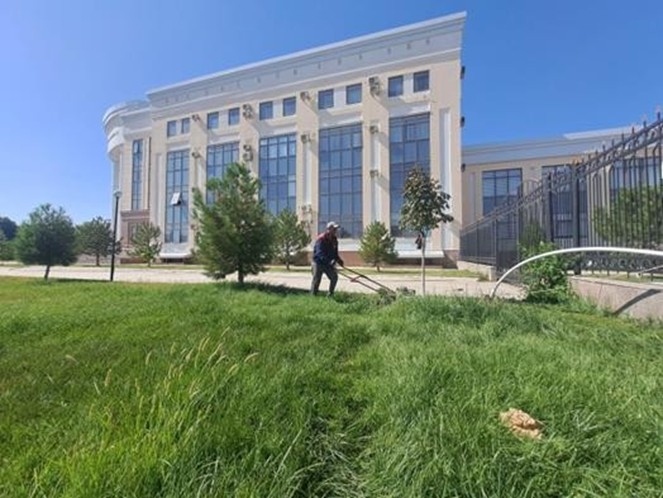
Reforestation at Navoi State University of Mining and
Technologies
Description:
Navoi State University of Mining and Technologies
demonstrates its commitment to sustainability and green
infrastructure through a number of green building
initiatives integrated into its campus development policies.
These initiatives are part of the university’s broader
efforts under the Energy and Climate Change category,
specifically addressing the implementation of
environmentally responsible construction and renovation
practices.
Key Green Building Elements:
1. Natural Ventilation System:
In line with green building policies, our university
buildings are designed to utilize natural ventilation
systems, reducing the need for mechanical cooling and
heating. This system enhances airflow and maintains indoor
air quality while conserving energy. Our university is
actively implementing green building initiatives by
continuously monitoring air quality. Buildings are designed
to optimize air flow, reducing dependency on artificial
cooling systems and improving indoor air quality naturally.
In collaboration with the local hydrometeorological center,
we receive constant updates on temperature and other
environmental factors. This partnership ensures that the
campus environment remains healthy and sustainable for
everyone.
2. Energy Efficiency Through Daylight Integration:
University facilities are constructed with architectural
features that maximize natural daylight, thus decreasing
electricity use and enhancing energy efficiency. The
architectural design of campus is strategically planned to
maximize the use of natural sunlight, reducing the need for
lighting during the day. This approach significantly
contributes to lowering our carbon footprint.
3. Green Spaces and Reforestation Efforts:
Our commitment to creating a green campus is evident through
our regular tree and flower planting initiatives. Several
times a year, students and staff participate in greening
programs to plant trees and flowers, fostering biodiversity
and enhancing the campus environment. The university
actively develops green zones across campus, including
reforestation projects to increase biodiversity and
sequester carbon emissions.
4. Air Quality Monitoring:
In collaboration with the local hydrometeorological center,
the university has implemented systems for ongoing air
quality monitoring across campus. This allows for timely
environmental assessments and supports data-driven
sustainability planning. These initiatives reflect the
university’s alignment with sustainable development goals
and its proactive role in climate action within the region.
5. Sustainability Office:
To ensure the effective and sustainable operation of the
Sustainability Commission, a dedicated Office has been
established. This office is equipped with modern
technologies, including computers, smart screens, and free
Wi-Fi. The design of the office is aligned with the
principles of sustainability, featuring natural colors and
eco-friendly materials, which contribute to a more
productive and comfortable working environment. The office
provides a free and convenient workspace for university
staff. The new office also enables sustainable work
practices from an environmental perspective.
These initiatives reflect the university’s alignment with
sustainable development goals and its proactive role in
climate action within the region.
6. Integrated Biometric Readiness System (IBRS):
An innovative device developed by university students has
been installed at the university entrance and integrated
with the Face ID access control system. The device is
designed to assess the readiness of students, academic
staff, and employees for study or work activities. It
measures an individual's blood pressure, body temperature,
and alcohol consumption status, and subsequently generates
an assessment based on the collected data. At present, a
cooperation agreement has been signed for the phased
implementation of this startup project at the depot
facilities of Uzbekistan Railways JSC. The project will be
further redesigned and adapted in accordance with the
company's operational requirements and technical
specifications. Its development, financing, and
implementation will be carried out with the support of the
company.
These initiatives reflect the university’s alignment with
sustainable development goals and its proactive role in
climate action within the region.
NSUMT: PATH TO SUSTAINABLE ENERGY RESEARCH AND EDUCATION ·
MEETINGS · INNOVATION · START-UPS
Navoi State University of Mining and Technologies remains
steadfastly committed to the advancement of Sustainable
Development Goal 7 (SDG 7), which seeks to ensure universal
access to affordable, reliable, sustainable, and modern
energy. Throughout the years 2024 and 2025, NSUMT has
intensified its efforts to champion energy efficiency,
renewable energy technologies, and sustainable practices.
These initiatives are carried out through multifaceted
approaches encompassing academic research, community
outreach, innovative projects, and international
collaborations.
The university’s philosophy is encapsulated by compelling
slogans such as “Renewable Energy is a Guaranteed Bright
Future” and “Energy Efficiency for Future Generations.”
These slogans not only symbolize NSUMT’s dedication to
sustainability but also serve as rallying cries that inspire
students, faculty, and the broader community to engage
actively in energy conservation and renewable resource
development.
Innovations and Research Driving Sustainable Energy
NSUMT’s commitment to sustainable energy is reflected in
groundbreaking research projects and the development of
innovative technologies that address critical regional and
national energy challenges.
• Solar-Powered Desalination Project: In a notable
collaboration between NSUMT’s faculty and specialists from
the Navoi Mining and Metallurgy Combine, a pioneering
solar-powered desalination device has been developed. This
cutting-edge system harnesses solar energy to purify
groundwater extracted from wells as deep as 60 meters. With
a capacity to produce up to 70 cubic decimeters (dm³) of
potable water per hour, this technology represents a
significant leap forward in providing clean drinking water
sustainably, especially for arid regions. The project not
only alleviates water scarcity but also promotes
environmental stewardship by utilizing clean solar power.
• Localization of Solar Panel Manufacturing: Recognizing the
strategic importance of renewable energy autonomy, NSUMT’s
Department of Electrical Engineering is spearheading efforts
to establish local production of solar panels. This
initiative aims to reduce Uzbekistan’s dependency on
imported solar technology, catalyze the growth of a domestic
green energy industry, and stimulate economic development.
Local manufacturing supports job creation, technology
transfer, and positions the region as a leader in renewable
energy production.
Conferences and International Research Initiatives
NSUMT continues to serve as a hub for scientific dialogue,
knowledge exchange, and collaboration through conferences
that bring together global experts and local stakeholders.
• GeoTech 2025 International Conference (April 29–30, 2025)
The sixth annual GeoTech conference convened experts from
across the globe, including representatives from Japan,
China, Russia, Chile, and Kazakhstan, in addition to
prominent local institutions. This prestigious event focused
on the latest advances in geotechnology, mining practices,
and the rational and sustainable use of natural resources.
Particular attention was paid to integrating
energy-efficient technologies in the mining sector,
emphasizing environmentally responsible extraction and
processing methods.
“GeoTech 2025” International Conference
“GeoTech V 2024” International Conference
“GeoTech 2024” International Conference
“GeoTech 2023” International Conference
• Digital Energy Systems Conference:
Building upon its engagement with emerging energy topics,
NSUMT academic and administrative staff, students actively
participated in the international conference “Prospects for
Creating a Digital Energy System, Issues, and Solutions for
Alternative Energy”. This forum provided a platform for the
exchange of innovative ideas addressing digital
transformation in energy systems, challenges in alternative
energy integration, and future pathways for smart energy
management. All contributions from NSUMT researchers were
indexed in Google Scholar, reflecting the academic rigor and
global relevance of their work.
Promoting Safety and Energy Efficiency Awareness
Winter Energy Safety Campaign: In response to the seasonal
spike in energy consumption and associated risks during
colder months, NSUMT’s Mining Faculty partnered with the
Navoi Regional Emergency Management Department to implement
a comprehensive safety campaign targeted at students
residing in university dormitories. This initiative educates
participants on critical safety protocols for energy use,
including fire hazard prevention, safe handling of gas
appliances, and measures to avoid carbon monoxide poisoning.
The campaign highlights responsible energy consumption while
safeguarding student well-being.
Expanding Global Partnerships
Academic Exchange with Akita University, Japan: Continuing
its tradition of fostering international collaboration,
NSUMT strengthens ties with Akita University through active
student exchanges. In 2024, a second-year master’s student
from NSUMT participated in the International Center for
Research and Education on Mineral and Energy Resources
(ICREMER) program. This renowned platform has hosted over
150 researchers worldwide, enabling cross-cultural knowledge
transfer and joint research ventures in sustainable resource
management and energy technologies.
Engagement in National Energy Conservation Efforts
• High-Level Energy Conservation Meeting
NSUMT proudly participated in a landmark national meeting
chaired by President Shavkat Mirziyoyev, focusing on energy
conservation policies and the strategic expansion of
alternative energy sources across Uzbekistan. This event
underscored the government’s commitment to a sustainable
energy future and set forth directives to improve energy
efficiency across various sectors.
• Regional Scientific Cooperation Meeting at NSUMT
Following the presidential directives, a significant
multi-sector meeting was convened at NSUMT involving Navoi
regional administrators, representatives of the Navoi Mining
and Metallurgy Combine, the regional prosecutor’s office,
economic planners, and university scholars. The purpose was
to foster scientific collaboration dedicated to the
widespread implementation of energy-saving technologies and
renewable energy solutions in the region, thereby aligning
regional development goals with national sustainability
targets.
Scientific Collaboration Meeting at Navoi State Mining and
Technology University
Recently, in line with the directives from the previous
meeting, a collaborative meeting took place at Navoi State
Mining and Technology University. This gathering included
representatives from the Navoi region’s administration, the
Navoi Mining and Metallurgy Combine, the regional
prosecutor's office, the economy and energy sectors, and the
university's scholars. The purpose was to establish
scientific cooperation focused on the widespread
implementation of energy-efficient technologies in the
region, showcasing a unified approach to enhancing regional
energy sustainability.
Sustainable Development Goal 7 (SDG 7) aims to ensure access
to affordable, reliable, sustainable, and modern energy for
all. In alignment with this goal, the Navoi State University
of Mining and Technologies is actively engaged in
initiatives that promote energy efficiency and the
utilization of alternative energy sources. This report
highlights the university’s recent activities and events
aimed at advancing energy efficiency and sustainable energy
practices in Uzbekistan. Our university values community
engagement and scientific collaboration to promote
sustainable practices. The recent meeting with regional
administrators and scholars highlights our dedication to
advancing energy-efficient technologies in Navoi and
contributing to regional growth.
Television and Public Outreach
Navoi State University of Mining and Technologies actively
shares its research in renewable energy with the public. The
television coverage on Navoi Regional Navoi Regional
Television and Radio Company underscores our commitment to
transparent community outreach and educating the public on
solar energy and energy efficiency.
The Navoiy Regional Television Company featured a segment on
the “Green Year” program, highlighting the initiatives
underway in the region to utilize solar energy and install
energy-efficient devices. This broadcast provided an
in-depth look at the ongoing efforts to implement the “Sunny
House” program in the Nurota district. The segment also
showcased the activities of the Energy Department at Navoi
State University of Mining and Technologies, particularly
focusing on the research conducted by its scientists in the
field of solar energy management. This initiative raises
awareness among a wider community while promoting
utilization of green energy.
GeoTech 2024 International Conference
Navoi State University of Mining and Technologies hosted the
“GeoTech V 2024” International conference, centered around
the theme of geotechnology, mining, green energy, and the
rational use of natural resources. The event featured
presentations from scholars both online and offline,
representing institutions such as the Krasnoyarsk Science
and Technology Center, the Uzbek-Japanese Center, and the
Kazakhstan Baykonur Mining and Metallurgy Institute.
Discussions revolved around technical innovations and
research results aimed at improving energy efficiency in the
mining and metallurgy sectors.
Hosting GeoTech V 2024 International Conference demonstrates
our university’s dedication to leading discussions on global
mining innovations and energy efficiency. This international
gathering allows us to share best practices and engage with
experts to enhance sustainability in the mining sector.
“GeoTech V 2024” International Conference
“GeoTech 2024” International Conference
International Seminar with Cambridge University
Navoi State University of Mining and Technologies remains
committed to fostering global partnerships that drive
forward energy-related research and innovation. A recent
international seminar, held in collaboration with the
Cavendish Laboratory at Cambridge University, highlighted
our shared focus on advancing the study of critical minerals
and energy-efficient practices through international
cooperation.
The seminar took place at Navoi State University of Mining
and Technologies and brought together university leadership,
faculty, doctoral candidates, and master’s students.
Professors from Cambridge University delivered presentations
on a joint international project aimed at strengthening the
capacity for advanced characterization of critical minerals
and energy materials. This event provided a valuable
platform to discuss the project’s achievements to date,
outline future objectives, and deepen academic collaboration
between the two institutions.
“Invention and Rationalization” Contest Announcement
Our university actively supports young innovators who are
passionate about renewable energy and environmental
sustainability. As part of this commitment, a call for
participation in the “Invention and Rationalization” contest
was officially announced.
Organized by the Ministry of Higher Education, Science, and
Innovation and the National Office of Innovations, this
initiative invites individuals aged 16 to 40 to submit
innovative ideas or proposals that offer tangible benefits
to society. The contest focuses on projects promoting energy
and resource conservation, environmental protection, and
social impact. Monetary prizes will be awarded to the top
three entries.
This national-level competition reflects our continued
dedication to nurturing creativity and practical solutions
for a sustainable future.
Interview with Nasiba Ashurova on Solar Energy
Initiatives
Navoi State University of Mining and Technologies is making
significant strides toward sustainability and energy
independence. In a recent interview, Nasiba Ashurova,
Vice-Rector for Finance and Economic Affairs, discussed the
university’s active role in expanding solar energy
initiatives. She highlighted the successful installation of
solar panels with a total capacity of 425 kWh, including
installations on student dormitories. These initiatives are
part of the university’s broader participation in the “Green
Energy” platform, aimed at promoting the adoption of clean
energy solutions. Nasiba Ashurova also emphasized the
potential for the university to achieve energy
self-sufficiency while contributing surplus electricity to
the regional power grid. This effort demonstrates our
institution’s leadership in sustainable energy practices and
community engagement.
Energy Efficiency and Alternative Energy Discussion
On March 26, 2025, a strategic meeting chaired by the
President of the Republic of Uzbekistan, Shavkat Mirziyoyev,
was held to address national priorities related to energy
efficiency and the increased use of alternative energy
sources. In alignment with the directives issued during this
high-level meeting, Navoi State University of Mining and
Technologies organized a regional session involving key
stakeholders, including representatives from the
administration of Navoi Region, the Navoi Mining and
Metallurgy Combine, the regional prosecutor’s office, and
various energy sector leaders. The primary goal of the
session was to establish scientific collaboration aimed at
the widespread adoption of energy-saving technologies in the
region. This aligns with both national goals and global
efforts to reduce energy consumption and greenhouse gas
emissions. Studies show that integrating such technologies
can lead to significant long-term reductions in
environmental impact and energy costs.
https://t.me/shmirziyoyev/26320
VI International Conference on the Comprehensive
Innovative Development of the Zarafshan Region
Navoi State University of Mining and Technologies continues
its strong tradition of academic leadership and
international collaboration through the successful hosting
of the VI International Conference on the Comprehensive
Innovative Development of the Zarafshan Region:
Achievements, Challenges, and Prospects. This prestigious
annual event was held on September 25–26, 2025, attracting
widespread attention from the global academic and
professional community. Building on the momentum of previous
years, the sixth edition of the conference brought together
over 300 participants, including more than 50 international
guests representing leading universities and research
institutions from countries such as the USA, Russia,
Kazakhstan, Germany and several others. Their presence
underscored the international significance of the event and
the growing interest in the Zarafshan region’s scientific
and industrial potential. The conference served as a dynamic
platform for sharing research findings, exchanging
experiences, and discussing new ideas across a wide range of
disciplines, including:
• Geology and Geotechnology
• Mineral Extraction and Resource Processing
• Chemical and Industrial Technologies
• Mechanical Engineering and Automation
• Energy Systems and Alternative Energy Sources
Particular emphasis was placed on the role of innovation in
sustainable energy development, reflecting global priorities
around energy conservation, renewable energy integration,
and environmentally responsible resource use. Sessions
explored both theoretical advancements and practical
applications in these fields, helping to shape future
scientific agendas in the region and beyond. One of the
conference’s key features was the active participation of
the Youth Union of NSUMT, which played a significant role in
organizing and engaging young researchers and students.
Their involvement highlighted the university’s commitment to
nurturing the next generation of scientists and innovators,
while also promoting a culture of research, critical
thinking, and international cooperation. By fostering
meaningful dialogue among academia, industry, and government
stakeholders, the VI International Conference has
strengthened the foundation for further collaborative
research, technological advancement, and sustainable
regional development. The growing scope and impact of the
conference reflect NSUMT's pivotal role as a hub for
innovation and knowledge exchange in Uzbekistan and Central
Asia. As the university looks ahead to future editions of
the conference, it remains dedicated to deepening
international partnerships and promoting comprehensive,
forward-looking strategies for the development of the
Zarafshan region.
VI International Conference
V International Conference
IV International Conference
III International Conference
Launch of the Electrical Engineering Course
NSUMT is also launching a new course in Electrical
Engineering, aimed at individuals interested in the
technical aspects of electrical circuits and devices. This
program will equip students with the necessary skills to
work in factories and plants, particularly in the field of
renewable energy sources. Participants will learn about the
operational principles of various energy-generating stations
and substations. The course includes practical training,
allowing students to gain hands-on experience, which is
vital for their future careers in the energy sector.
Statistics: Investing in education and training programs in
renewable energy can significantly increase the number of
skilled professionals needed to advance sustainable energy
initiatives in Uzbekistan. Empowering Innovation: NSUMT’s
Support for Low-Carbon Economy Start-Ups and Clean Energy
Solutions Navoi State University of Mining and Technologies
remains at the forefront of promoting a low-carbon economy
by actively supporting start-up projects led by its staff,
students, and young scientists. Through dedicated
initiatives, such as university-run start-up competitions,
NSUMT encourages the development of innovative technologies
aimed at advancing clean energy solutions and sustainable
practices. A recent example of this commitment is the
development of an innovative solar panel control device by a
team of students from the Energy Department. Designed to
improve solar energy efficiency, the device operates in a
“sunflower mode”, automatically adjusting the position of
solar panels to track the sun’s movement throughout the day.
This smart tracking system significantly enhances energy
output compared to fixed-panel installations, showcasing a
practical and impactful innovation aligned with energy
efficiency and sustainability goals. The student team
successfully demonstrated the functionality of the device to
faculty members, emphasizing how grassroots innovation can
contribute meaningfully to clean energy adoption. This
project reflects NSUMT’s broader mission of fostering
applied research that addresses real-world challenges in
renewable energy. Statistics: Solar energy remains one of
the most promising sources of renewable energy worldwide.
Improvements in solar panel tracking and efficiency can lead
to significant reductions in both energy costs and carbon
emissions, supporting the transition to a greener energy
future.
International Research Collaboration: Advancing Hydrogen
Technologies for a Carbon-Neutral Future
In alignment with global efforts to combat climate change,
NSUMT scientists are also engaged in advanced international
research under the project titled: “Development of
Innovative Technologies for Efficient Generation of
Green/Blue Hydrogen for the Realization of a Carbon-Neutral
Society with Consideration of Industrial and Environmental
Characteristics in the Region”. This groundbreaking project
is funded by Japan’s Science and Technology Research
Partnership for Sustainable Development (SATREPS) and
conducted in collaboration with Kyushu University. As part
of this initiative, NSUMT researchers are actively exploring
the following cutting-edge technologies:
• Green Hydrogen Production: Utilizing solar energy,
vast desert and steppe landscapes, and electrolysis systems
to produce clean hydrogen.
• Blue Hydrogen Generation:
Using residual oil from oil fields to produce hydrogen while
capturing and minimizing CO₂ emissions.
•
High-Efficiency Steam Electrolysis: Leveraging solar heat
and electricity to power electrolysis systems, including the
reuse of waste heat and steam from Navoi’s Combined-Cycle
LNG Power Plant. These innovative approaches aim to support
the creation of a carbon-neutral energy system tailored to
the region’s industrial and environmental context. NSUMT’s
participation in this international collaboration highlights
its strategic role in global energy research and its
commitment to sustainable technological advancement.
Internship Projects and Educational Activities in the
Field of Renewable Energy
Professors and other staff from the Electro Energy
Department of Navoi State University of Mining and
Technologies has the opportunity to undergo a scientific
internship in Madrid at the international “Edibon” company.
During the internship at the company sites, they can
actively participate in the company’s latest solar panel
projects and conducting scientific experiments in “Green
Energy” laboratories, aiming to establish collaboration
between Navoi State University of Mining and Technologies
and “Edibon” company in the future.
Innovative Water Purification Device Proposed for
Scaled-Up Production
At the “Research on Water Issues” laboratory, established
within the Navoi Mining and Metallurgical Combine,
researchers from Navoi State University of Mining and
Technologies are conducting advanced chemical, spectral,
radiological, and technological studies focused on water
purification and environmental sustainability. One of the
lab’s most significant achievements to date is the
development of an innovative solar-powered water
purification device designed to convert underground water
into clean, potable water. This environmentally friendly
solution harnesses solar energy to address water scarcity –
an issue of growing concern in arid regions like Zarafshan.
In 2025, the Minister of Higher Education, Science and
Innovations visited the lab to review the prototype.
Impressed by its potential, he provided valuable
recommendations for technical improvements and encouraged
the scaling up of production to meet broader regional needs.
The device is now being considered for expanded
implementation in remote areas with limited access to clean
drinking water.
Improving Energy Efficiency: Research and
Recommendations
As part of its commitment to advancing Sustainable
Development Goal 7: Affordable and Clean Energy, NSUMT
continues to conduct applied research aimed at reducing
energy losses and enhancing efficiency across Uzbekistan’s
energy infrastructure. Academic staff from the Energy
Mechanics Faculty are working in close collaboration with
specialists from regional energy organizations. Together,
they are conducting in-depth studies on substations and
transformer points to identify systemic inefficiencies in
energy distribution networks. In particular, detailed
assessments have been carried out in the Navbakhor and
Karmana districts, where the team is gathering data on
energy losses, technical malfunctions, and outdated
infrastructure. Based on the findings, the researchers are
developing scientific and technical recommendations to
optimize energy flow and reduce losses in the system.
Statistics: Effective energy management strategies can
reduce transmission and distribution losses by 10–20%,
significantly lowering operational costs and environmental
impact. Through these initiatives, NSUMT is strengthening
its role as a national leader in promoting energy
efficiency, renewable energy adoption, and sustainable
infrastructure development—all key components in
transforming Uzbekistan’s energy landscape in alignment with
global sustainability goals.
Carnival of Robotics and Emerging Energy Technologies
In 2025, NSUMT hosted a vibrant “Carnival of Robotics and
New Technology in the Energy Sector”, an event designed to
foster scientific and technical creativity among youth while
enhancing the prestige of engineering and technology
professions. The event featured:
• Interactive robotics exhibitions
• Student
competitions in automated systems
• Masterclasses on
energy-efficient technologies
• Workshops on
sustainable energy solutions By engaging high school
students, university students, and young innovators, the
carnival promoted STEM education and encouraged the next
generation to actively participate in the development of
advanced energy technologies. This initiative underscores
NSUMT’s commitment to developing a skilled,
innovation-driven workforce capable of supporting the
country’s shift toward sustainable energy solutions.
Faculty-Led Community Engagement for Renewable Energy
Awareness
NSUMT places strong emphasis on community outreach and
grassroots advocacy for clean energy. What began as a small
initiative by a group of faculty members to implement
renewable energy systems in their homes has grown into a
broad-based movement within the university. In 2025, over 50
faculty members have taken part in this initiative,
demonstrating solar panel installations, energy-saving
lighting systems, and smart home energy controls as part of
personal sustainability projects. These efforts not only
reduce their own carbon footprint but also serve as
practical demonstrations to the wider community of how
renewable energy can be effectively integrated into daily
life. Regular public talks, workshops, and open-house
demonstrations have helped raise awareness of the economic
and environmental benefits of adopting sustainable energy
solutions, particularly among students, local residents and
regional stakeholders.
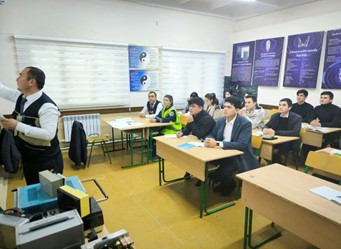
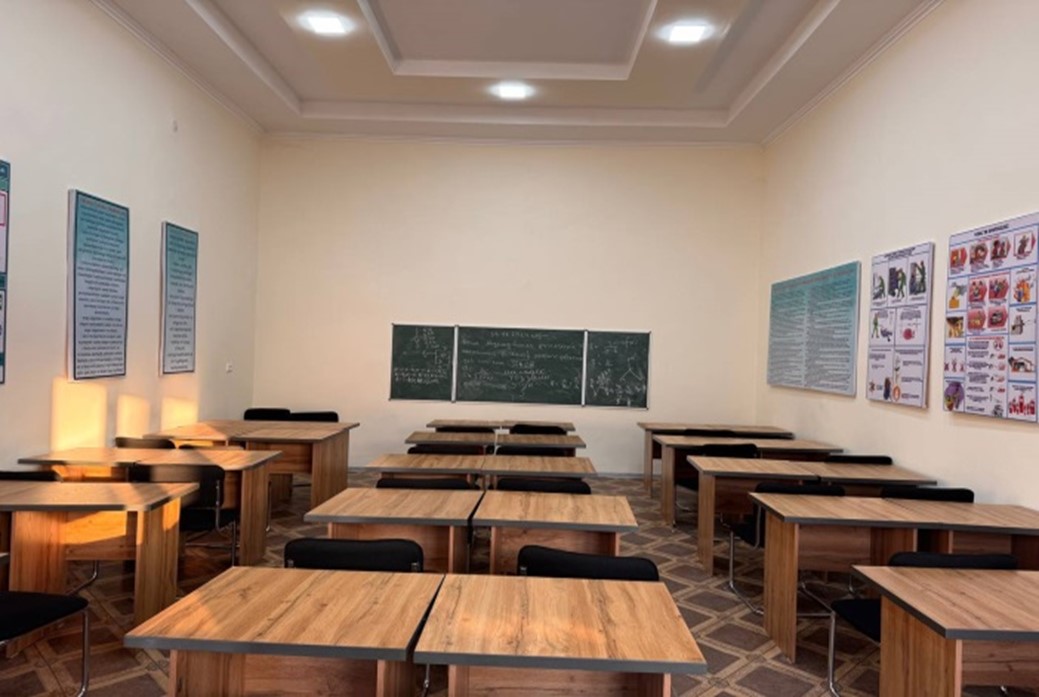
The Navoi State University of Mining and Technology has
established specialized department branches
These branches are established within leading industrial
enterprises to support its dual education system, combining
theoretical instruction with practical, hands-on training.
These branches serve as vital extensions of the university,
enabling students to seamlessly integrate academic learning
with real-world professional experience. One such branch is
the Department of Electro energetics, located at the Navoi
Thermal Power Station JSC. This branch operates directly
within the production and service environment of the power
station, allowing students to apply their theoretical
knowledge in an active industrial setting. The facility is
equipped to support dual education, featuring two
blackboards and a seating capacity for 110 students, thereby
providing an effective and comfortable learning environment.
Students benefit from uninterrupted theoretical lessons
alongside continuous practical training integrated with the
station’s daily operations. Similarly, the Branch of the
Automation and Control Department functions at the Navoi
Mining and Metallurgy Combine, embedded within the
production and service units of this major industrial
enterprise. This branch is designed to accommodate 74
students and is furnished with two blackboards to facilitate
theoretical instruction. Through this setup, students gain
critical hands-on experience in automation and control
technologies, ensuring their education remains aligned with
current industry standards and practices. Both branches
exemplify NSUMT’s commitment to the dual education system,
which enables students to receive full practical training
within these enterprises while simultaneously completing
their academic coursework. This innovative approach ensures
that students develop the necessary technical skills and
industry insights to excel in their professional careers.
Moreover, many students continue their employment with the
same organizations after graduation, highlighting the
branches’ significant role in facilitating workforce
development and promoting smooth transitions from education
to employment. In summary, the department branches at the
Navoi Thermal Power Station and the Navoi Mining and
Metallurgy Combine represent critical components of NSUMT’s
educational strategy, bridging the gap between theory and
practice, and contributing to the advancement of the
region’s industrial sectors through the cultivation of
highly qualified professionals.
-
-
Future Actions: Building a Sustainable Energy Future
To further strengthen its leadership in renewable energy
innovation and community engagement, Navoi State University
of Mining and Technologies plans to take the following
actions in 2026 and beyond: 1. Expanding Renewable Energy
Infrastructure
• Increase the number of solar panel systems across campus
buildings.
• Invest in pilot wind turbine installations to diversify
energy sources and reduce reliance on fossil fuels.
2. Strengthening Community Engagement
• Launch new awareness campaigns, training programs, and
certification courses focused on clean energy.
• Collaborate with schools and local governments to promote
sustainability education.
3. Enhancing Research Capacity
• Deepen partnerships with international universities and
innovation hubs to develop region-specific energy solutions.
• Support the creation of additional student-led start-ups
in clean tech and low-carbon innovations.