Impact of Education and Research programs in supporting the Sustainable Development Goals (SDGs)
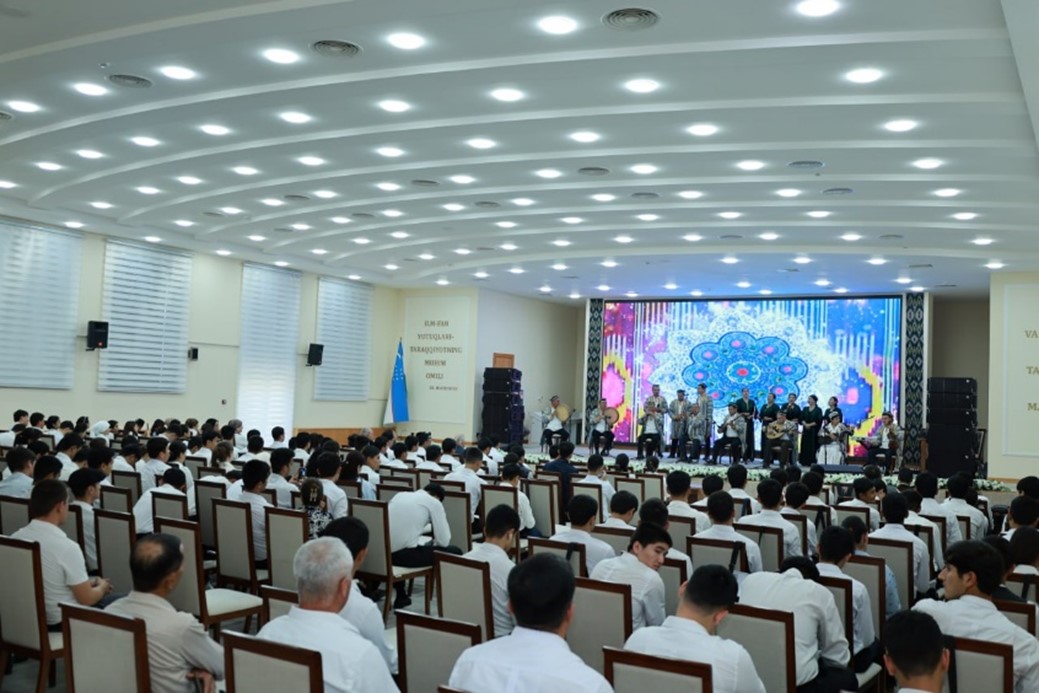
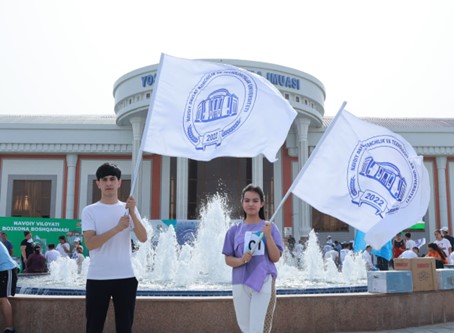
Description
Navoi State University of Mining and Technologies has
undertaken significant efforts in aligning its educational,
research and institutional governance with the Sustainable
Development Goals (SDGs). Through a holistic approach that
integrates sustainability across curriculum, research,
student engagement, and administrative structures, NSUMT is
making measurable contributions to multiple SDGs,
particularly in areas related to green jobs, sustainable
industry, water and energy efficiency, and institutional
governance.
Key Programs and Initiatives Supporting the SDGs:
Integration of Sustainability Across Education and Research
(SDG 4, 7, 9, 13)
NSUMT has steadily increased its graduate output, with 4388
students graduating during 2022-2025. Of these, 531
graduates (12.1%) secured green jobs across sectors such as:
• Renewable energy and energy efficiency;
• Water resource management;
• Food production and sustainable agriculture;
• Environmental consulting and biological sciences.
This alignment of academic programs with the demands of the
green economy contributes significantly to SDGs 4 (Quality
Education), 8 (Decent Work and Economic Growth), and 13
(Climate Action).
Establishment of Sustainability Governance Units (SDG 16, 5,
11)
A Sustainability Commission was established by the Rector’s
decree, playing a central role in driving environmental and
social sustainability efforts on campus.
Core responsibilities include:
• Labor protection and workplace safety (SDG 8);
• Gender equality initiatives supporting opportunities for
women and girls (SDG 5);
• Reforestation and greenery campaigns;
• Cultural and environmental awareness events (SDG 11).
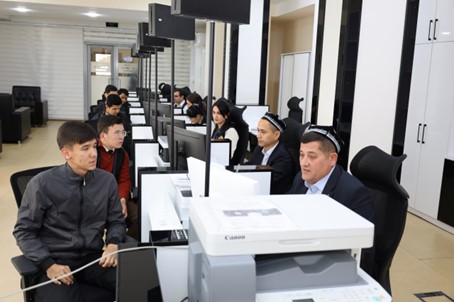
A Registrar’s Office works closely with the Commission to
collect, process, and route sustainability-related
suggestions from students and staff, ensuring participatory
governance.
Use of ICT for Research Planning and Governance (SDG 9, 16,
17)
NSUMT has implemented a robust digital infrastructure for
research management and governance using platforms such as:
• Monitoring.ilmiy.uz for planning and identifying
sustainability-focused research themes;
• Microsoft Project, Zoom, and Teams for virtual
collaboration and project management;
• Slab.gov.uz as a Laboratory Information Management System
(LIMS) for managing research data;
• Hemis platform for tracking research progress and
publication outputs.
These systems support transparent, data-driven research
planning and monitoring, directly contributing to SDG 9
(Industry, Innovation and Infrastructure) and SDG 16 (Peace,
Justice and Strong Institutions).
Green Job Readiness and Workforce Development (SDG 8, 12, 6)
The university prepares students for employment in
sustainability-related sectors through specialized training
and capstone projects.
Green job roles include:
• Renewable Energy Specialist;
• Energy Efficiency Specialist;
• Waste Management Engineer;
• Agriculture Consultant;
• Biologist, among others.
These efforts contribute directly to the transition toward a
circular economy and support SDG 12 (Responsible Consumption
and Production) and SDG 6 (Clean Water and Sanitation).
Community and Sectoral Engagement (SDG 11, 17)
Collaboration with local industries such as silkworm farming
enterprises, regional water utilities, and Agrobank enables
the university to align student learning with real-world
sustainability challenges. The university fosters
partnerships that strengthen institutional capacity and
knowledge-sharing, contributing to SDG 17 (Partnerships for
the Goals).
SDGs Directly Supported:
• SDG 1 – No Poverty
• SDG 2 – Zero Hunger
• SDG 3 – Good Health and Well-being
• SDG 4 – Quality Education
• SDG 5 – Gender Equality
• SDG 6 – Clean Water and Sanitation
• SDG 7 – Affordable and Clean Energy
• SDG 8 – Decent Work and Economic Growth
• SDG 9 – Industry, Innovation, and Infrastructure
• SDG 10 – Reduced Inequalities
• SDG 11 – Sustainable Cities and Communities
• SDG 12 – Responsible Consumption and Production
• SDG 13 – Climate Action
• SDG 14 – Life Below Water
• SDG 15 – Life on Land • SDG 16 – Peace, Justice and
Strong Institutions
• SDG 17 – Partnerships for the Goals
Through the coordinated efforts of its faculties,
sustainability commission, and digital infrastructure, Navoi
State University of Mining and Technologies has developed a
strong foundation for contributing to the Sustainable
Development Goals. By embedding sustainability into its
academic and operational frameworks, the university not only
enhances the employability of its graduates in green sectors
but also serves as a regional leader in environmentally and
socially responsible higher education.